The better food map
The Problem:
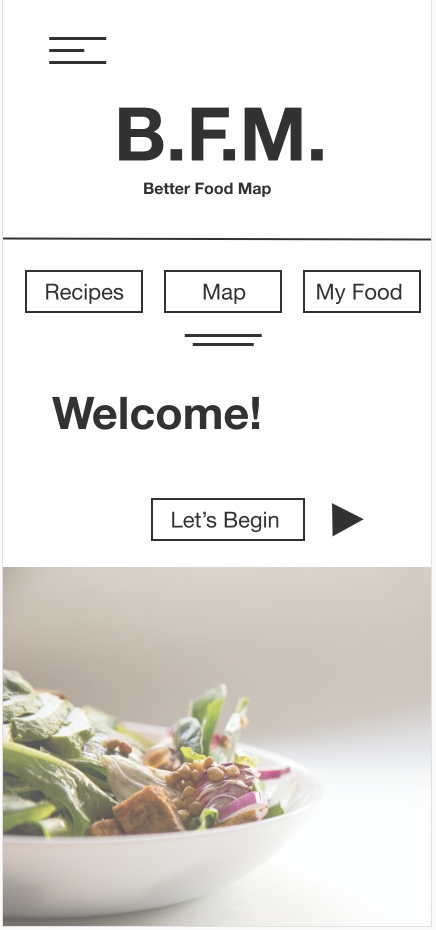
Looking at the problem, why is it hard to find a quick meal for my friend or partner who cannot eat something specific such as nuts or stone fruit
The Problem:
Create a web application that collects data while generating a new eating experience for people with allergies or dietary preferences.
Abstract:
This case study explores the intersection of human passion for food and technology by developing the Better Food Map. This progressive web application provides dietary guidance and food discovery based on users' preferences and restrictions. Rooted in the author's seventeen years of restaurant experience and guided by culinary insights, the application aims to connect users to specific meals, considering individual dietary needs. Unlike existing food applications, the Better Food Map emphasizes simplicity, security, and privacy, avoiding social media features and unnecessary profile building. The application's core functions—Recipes, Map, and My Food—allow users to create personalized dietary guides and contribute to the community-driven database. The research includes pragmatic design, test-driven development, and a comparison of database options, with MongoDBAtlas selected for its support and scalability. Challenges like API linkage and cloud storage considerations were encountered during development. The application leverages intuitive UI design and responsive features for an inclusive user experience, aspiring to achieve a unified whole akin to a "total work of art." This study presents not just a technological innovation but a reflection of human connection and needs in the context of food, opening possibilities for further refinement and large-scale implementation.
Purchase quality food and do so regularly. Avoid the allure of “special” offers without inspecting their quality first. The apples in that discounted bag could be bruised. Don't buy food solely for its low price if you don't need it; a spoiled bargain is no bargain at all." - (Calvert, 1961) - A Practical Don't, from the James Beard Cookbook.
Like many, I've spent a significant portion of my life in the lines and on the floor of a restaurant. However, unlike some, my experience has been enriched by working alongside award-winning chefs, restaurant owners, unique staff, and culinary enthusiasts. The eighteen years I've dedicated to the restaurant industry have taught me one vital truth: the restaurant experience encapsulates humanity's profound and universal love for food. Our passion for food is relentless; it unites, sustains, and sometimes controls us.
Though not all of us will dine at the world's top restaurants, we still share the ability to exchange culinary knowledge, recipes, and local gastronomic treasures hidden within our communities.
My inspiration for food, cooking, and the endless resources of culinary arts is drawn from the wisdom of the James Beard Cookbook. The core of this paper focuses on leveraging technology, information communication, and the internet to create a food-related web application. My research this quarter has not only dealt with full-stack web design and development and user experience design for an agile web application but has also explored our intrinsic love and need for food.
The psychology of food is a fascinating subject. My mentor, Eric Distefano, a New Mexican Culinary legend, impressed me that while we all need food, being a chef means sharing that need to forge trust and desire. To Eric, we are all chefs, though many may not enjoy cooking. Factors like smell, taste, cost, and appearance are paramount for most. Eric went to great lengths to accommodate guests with allergies or dietary restrictions, making each diner feel special. Though many chefs and food providers strive to do this, it's no small feat.
With this in mind, I am determined to create a tool that helps people discover dining locations and broaden their culinary horizons. This tool would address a common issue: Why is it so challenging to find a quick meal for someone with specific dietary restrictions, like an allergy to nuts or stone fruit? How can this problem be understood on a broader scale, and how can data be harnessed to simplify the dining experience for many of us?
Case Study:
User Needs and Customer Needs:
Across the United States, dietary restrictions, food allergies, or even a simple distaste for the ordinary limit people's food choices. My current technological endeavor, the application called "The Better Food Map," aims to address these issues. This progressive web application will provide users with dietary tools they can keep handy on smartphones and desktop computers.
Building this application has focused on meeting critical user needs and ensuring the design is practical and functional. Unlike other food applications like Yelp, OpenTable, Google, and Bitewell, I aim to collect only essential data, not private information. While many platforms in the food space emphasize social media features, such as in-depth profile building, more complexity is needed to stifle originality.
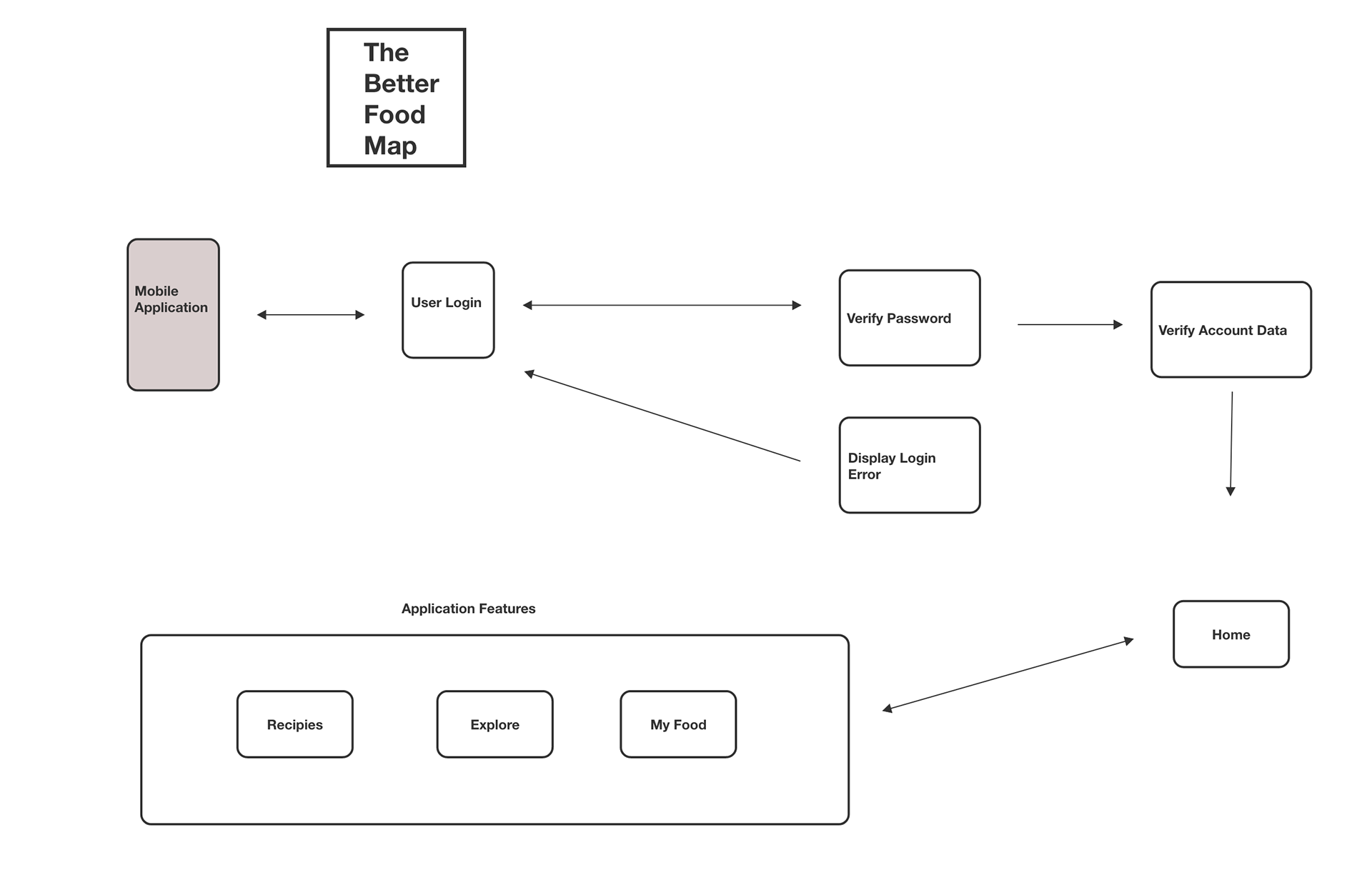
I initially considered allowing users to create profiles to share recipes and restaurants, but I now see the wisdom in keeping things simple and secure, like using an ambiguous avatar. While basic information like name and email will be required, the application will be designed to function without needing the user's location, and it will be linked to the Google Maps API.
Security is a paramount consideration, especially given the large-scale data collection involved. Anonymity will be a key feature to enhance both safety and user experience. The three main features of the application, "Recipes," "Map," and "My Food," will enable users to build personal dietary guides and contribute to a database that helps others find unique meals.
The anonymized data will minimize the risk of breaches and address storage concerns as the user base grows. Leveraging alternative cloud storage early on is one solution being explored.